
Feline eyes are exceptionally expressive, capturing the quiet elegance and sharp curiosity that cat owners love. Because cats rely so heavily on their sharp vision and protective ocular reflexes to navigate their world, keeping their eyes clear and healthy is vital to their daily quality of life. However, cat owners frequently discover their feline companion holding one eye partially closed, blinking rapidly, or displaying watery discharge down their cheek. Recognizing squinting and watery discharge early is essential, as these localized signs often reflect corneal irritation, blocked tear ducts, or active viral inflammation.
Because cats instinctively conceal physical pain, minor ocular symptoms can quickly evolve into deeper structural complications if left unaddressed. Searching for compassionate vets near me allows pet parents to secure fast diagnostic clarity whenever sudden eye changes occur. Seeking urgent pet care bridges the gap between routine wellness exams and intensive hospital stays, delivering rapid diagnostic answers and targeted relief for non-life-threatening ocular distress. For families living in White Oak, understanding what triggers feline eye symptoms ensures your cat receives gentle, effective support before discomfort worsens.
The Anatomical Causes of Feline Ocular Symptoms
Feline eyes possess delicate anatomical features, including a prominent third eyelid and sensitive corneal surfaces. When environmental irritants or internal changes affect these structures, noticeable physical reactions occur quickly.
Corneal Scratches and Ulcerations
Active cats exploring dusty corners, chasing toys, or playing with housemates can easily catch an eye on a stray carpet fiber or claw. Scratching the delicate outer layer of the cornea triggers an immediate protective reflex, causing the cat to hold the eyelid tightly shut while producing heavy, clear fluid to flush the surface naturally.
Nasolacrimal Duct Blockages and Fluid Overflow
Tears normally drain through tiny channels called nasolacrimal ducts, flowing from the inner eye corners into the nasal cavity. When localized inflammation, swelling, or debris blocks these narrow pathways, tears lose their natural drainage route and spill continuously over the lower eyelids, staining facial fur and irritating surrounding skin.
Viral Upper Respiratory Stress and Conjunctivitis
Feline viral strains often target the conjunctival membranes lining the inner eyelids and white sclera. This triggers significant tissue swelling, redness, and continuous fluid discharge. Without proper clinical support, secondary bacterial growth can quickly complicate the initial viral flare.
Evaluating Feline Eye Symptoms: Home First Aid vs. Immediate Clinical Assessment
Determining whether your cat’s eye tearing can be observed at home for a few hours or requires intermediate veterinary attention depends on observing their comfort, posture, and facial appearance.
- Home Observation (Safe for Initial Care):
- Minor, clear watery tearing following quiet rest in a dusty area
- Transient, slight squinting that resolves completely within an hour
- Normal appetite, playful energy, and comfortable grooming habits
- Bright, clear eyes with zero visible cloudiness, redness, or third eyelid protrusion
- Clinical Urgent Care (Requires Prompt Evaluation):
- Persistent squinting, holding the eyelid tightly shut, or continuous rapid blinking
- Thick yellow, green, or cloudy discharge accumulating around the eye corners
- Visible cloudiness, bluish discoloration, or blood spots across the eye surface
- Relentless pawing at the face, rubbing eyes against carpets, or head shaking
- Pronounced swelling of the inner eyelids or elevated third eyelid covering the eye
Point-of-Care Diagnostic Testing for Feline Eye Conditions
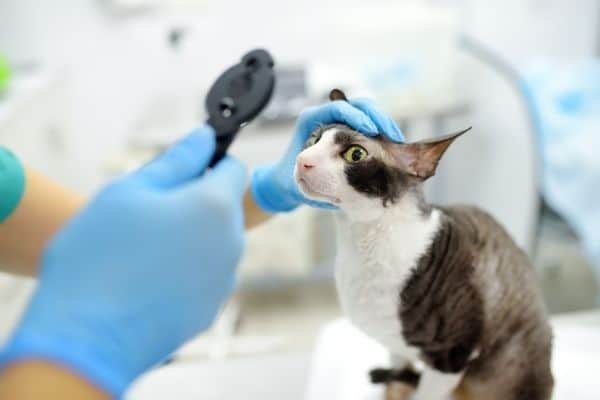
When you seek urgent vet care for optical concerns, veterinary clinicians rely on specialized point-of-care tools to inspect eye structures and determine the precise cause of discomfort without long delays.
- Fluorescein Stain Application: Uses a temporary, specialized dye that adheres to damaged corneal cells, revealing hidden surface scratches, corneal ulcers, and tissue tears under cobalt blue light.
- Ophthalmic Tonometry Testing: Measures intraocular fluid pressure gently using a soft, non-invasive probe to detect pressure spikes or internal fluid drainage shifts instantly.
- Schirmer Tear Testing: Evaluates quantitative tear production using small, sterile paper strips to confirm whether tear flow is normal, excessive, or insufficient.
Combining instant diagnostic feedback with pet-safe anti-inflammatory drops, protective lubrications, or targeted antiviral therapies stops pain at its source and protects your companion’s long-term sight.
Supporting Feline Companions in White Oak
Keeping your cat healthy involves creating a clean, safe indoor environment and staying mindful of subtle physical changes. Checking your cat’s face during daily petting sessions allows you to spot minor cloudiness, watery discharge, or lid asymmetry before discomfort disrupts their routine.
If you are from White Oak and looking for urgent vet care, taking fast action at the first sign of optical haze, discharge, or eye discomfort provides your cat with the best opportunity for a smooth, complete recovery.
Providing timely medical attention preserves your companion’s quality of life, protects their eyesight, and offers complete peace of mind for your entire household.
Taking Action for Your Cat’s Visual Comfort
When your cat exhibits sudden squinting, excessive tearing, or visible physical discomfort, securing a prompt evaluation keeps their recovery moving in the right direction. You can schedule an online appointment through our portal to reserve a convenient time for your cat to be examined by our medical staff.
If your companion is actively displaying uncomfortable eye symptoms or sudden optical changes and you prefer to speak directly with our clinical staff before arriving, please call our team at 412-678-4042 so we can offer immediate guidance and prepare for your visit.
Our compassionate medical team looks forward to delivering gentle, expert care for your companion at White Oak Veterinary Clinic.
Frequently Asked Questions
Q1. Why does my cat keep squinting one eye while keeping the other wide open?
Ans: Unilateral squinting is a protective reflex triggered by localized pain or irritation. It typically indicates a foreign particle trapped under the eyelid, a corneal scratch, or elevated pressure in that specific eye. A prompt veterinary exam using diagnostic stains is needed to locate the source of discomfort safely.
Q2. Is clear watery eye discharge in cats always a sign of infection?
Ans: Not necessarily. Clear tearing can result from minor dust irritation, wind exposure, mild allergies, or a temporary tear duct blockage. However, if the discharge becomes continuous, turns yellow or green, or is accompanied by squinting and redness, a veterinary evaluation is required to rule out deeper eye issues.
Q3. Can I use human eye drops to soothe my cat’s watering eye at home?
Ans: No. Human eye drops often contain decongestants or chemical ingredients that can cause severe stinging, elevated internal eye pressure, or tissue damage in felines. Treating cat eye issues safely requires accurate diagnosis and medications specifically formulated for feline physiology.
Q4. What causes a cat’s third eyelid to suddenly become visible?
Ans: An elevated third eyelid, or nictitating membrane, appears when a cat experiences ocular pain, localized inflammation, or systemic illness. It acts as a natural protective shield over the eye, signalling that a veterinarian should evaluate your cat for underlying health shifts or corneal irritation.
Q5. How should I safely transport a cat experiencing eye pain to the clinic?
Ans: Keep your vehicle cool, quiet, and shaded from bright sunlight to reduce light sensitivity. Line a secure, well-ventilated cat carrier with soft blankets, place a light towel over the carrier to minimize visual stress, and avoid touching or rubbing your cat’s face during travel.